


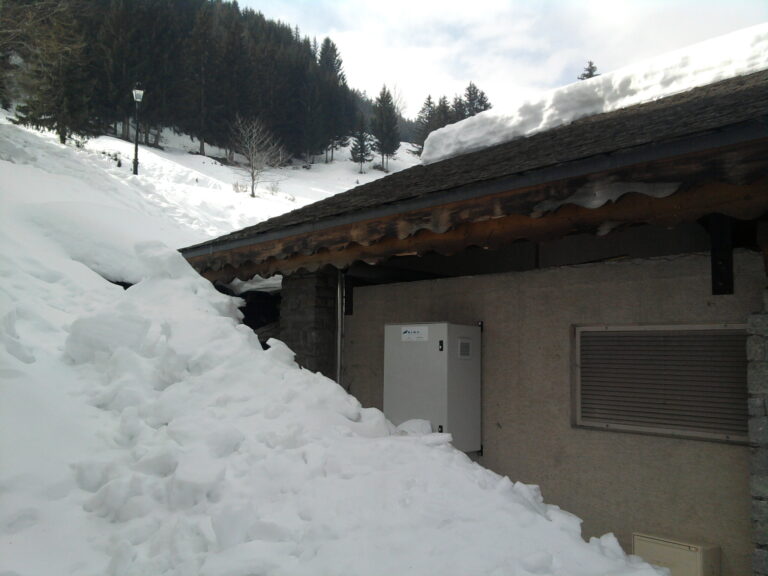
Choosing an industrial control cabinet or a polyester enclosure for an outdoor installation involves more than simply ticking the “IP65” box. In the field, the cabinet is exposed to far more than just water and dust. It is subject to atmospheric corrosion, UV radiation, internal condensation, mechanical shocks, vibrations and, depending on the site, even explosive atmospheres.
To ensure the safety of a polyester enclosure or cabinet project in an industrial outdoor setting, it is essential to take a systems-based approach:
- the site’s actual environment, the equipment to be protected, the chosen building envelope
- quality of the installation (cabling, ventilation, maintenance, security).
Why the IP rating is not sufficient for an outdoor electrical cabinet
The IP code, defined by the IEC 60529 standard, classifies the levels of protection against access to hazardous parts, the ingress of solid objects and the ingress of water. It is an essential foundation for any industrial electrical cabinet or IP65/IP66 polyester enclosure, but it does not cover all the risks associated with a harsh outdoor environment.
The IEC 60529 standard does not address corrosion caused by saline or industrial atmospheres, ageing due to solar radiation, or explosive atmospheres. Nor does it take into account moisture generated by condensation inside the enclosure (despite this being one of the main causes of corrosion and insulation leakage on the exterior).
For further information on this topic, Europoly explains the different levels of protection on its page dedicated to the IP/IK protection rating, and the issue of striking a balance between watertightness and ventilation is discussed in detail in our article on polyester enclosures: ventilation or watertightness.
Regulatory framework for outdoor polyester enclosures and cabinets
Classification of the installation environment
For polyester electrical enclosures or polyester cabinets installed outdoors, the IEC 60721-3-4 standard provides a classification of environmental parameter groups and their severity levels for stationary use in locations not protected from the elements.
This approach allows for an objective assessment of site conditions (temperature fluctuations, humidity, pollution, vibrations, dust) before determining the appropriate IP and IK ratings and the qualification tests to be carried out. In the telecommunications sector, the ETSI EN 300 019-2-4 standard applies a similar approach to outdoor enclosures, drawing heavily on the IEC 60068 test series. This analogy remains useful for outdoor electrical enclosures housing PLCs, analysers or communications equipment subject to similar stresses.
IP, IK and supplementary environmental tests
With regard to water and dust ingress, the IP rating, in accordance with standard IEC 60529, remains the benchmark for polyester enclosures and boxes. As for resistance to mechanical impact and vandalism, the IK code of standard IEC 62262 (NF EN 62262) allows a measurable level of resistance to be specified for an industrial electrical enclosure intended for outdoor installation.
In addition to IP and IK, the IEC 60068 series provides key environmental tests for the qualification of enclosure solutions:
- IEC 60068-2-30: humidity/temperature cycles involving condensation
- IEC 60068-2-52: cyclic salt spray for saline atmospheres
- IEC 60068-2-14: Rapid temperature changes
- IEC 60068-2-6: sinusoidal vibrations
- IEC 60068-2-6: sinusoidal vibrations
- IEC 60068-2-68: airborne dust and sand
These tests enable the performance of an outdoor polyester enclosure to be assessed against the actual severity of the environment as defined by IEC 60721-3-4.
Corrosion atmosphérique et environnements sévères
With regard to corrosion risks, ISO 9223 provides a classification system for atmospheric corrosivity based on the corrosion loss of reference metals in the first year, supplemented by dose-response functions. ISO 12944-2 provides a framework for describing the corrosivity of environments, from C1 to C5 and CX, and for guiding the selection of corrosion protection, particularly for steel structures. In severe marine and offshore environments, ISO 12944-9 specifically addresses CX-type conditions, in line with ISO 12944-2.
For an electrical enclosure installed in a coastal environment or a harsh industrial atmosphere, these standards justify the use of corrosion-resistant materials and non-metallic enclosure solutions, such as glass-fibre-reinforced polyester enclosures.
ATEX and analyser manufacturers
In sites with explosive atmospheres (refineries, petrochemical plants, solvent storage facilities, silos), the placing on the market of equipment is governed by Directive 2014/34/EU (ATEX). For analyser housings or pressurised measuring chambers, the IEC 60079 series provides the regulatory framework, with IEC 60079-13 covering pressurised or ventilated enclosures and IEC TR 60079-16 covering artificial ventilation.
A polyester cabinet or enclosure is not automatically ‘ATEX’-compliant: it is the overall design, the protection strategy (internal overpressure, ventilation, venting) and the certification that determine compliance in hazardous areas.
Risk assessment for an outdoor industrial control cabinet
Climatic constraints, thermal cycles and sunshine
Temperature fluctuations and hot/cold cycles accelerate component fatigue, seal deterioration and measurement drift in sensors and analysers. Sunlight creates an additional thermal load inside a weatherproof outdoor electrical enclosure, which can lead to overheating if ventilation or air conditioning has not been properly planned in advance.
UV radiation and material ageing
Pour les matériaux polymères et composites, l’exposition aux UV est un facteur majeur de vieillissement. La série ISO 4892 définit des méthodes de vieillissement accéléré par lumière (xénon), humidité et cycles de mouillage. Plusieurs études montrent que les UV peuvent dégrader la matrice des composites, générer des microfissures et favoriser l’entrée d’humidité, selon la résine et les conditions d’exposition.
Moisture, condensation and internal corrosion
La condensation apparaît lorsque les parois ou composants internes de l’armoire sont à une température inférieure au point de rosée de l’air intérieur. L’essai IEC 60068-2-30 vise justement ces conditions d’humidité élevée et de cycles de température, qui entraînent en pratique la formation de gouttelettes sur les surfaces des équipements.
As IEC 60529 does not cover moisture caused by condensation, a polyester enclosure with an IP65 rating that is poorly managed thermally may nevertheless suffer from corrosion, insulation failures and repeated breakdowns. This point is discussed in more detail in our article on ventilation and sealing of polyester enclosures.
Milieux salins et atmosphères corrosives industrielles
In marine or saline environments, salt spray accelerates the corrosion of metal parts and can also degrade certain non-metallic materials; this is the subject of the IEC 60068-2-52 test. Industrial atmospheres (SO₂, NOx, chlorides, acid dust) are classified under ISO 9223 and ISO 12944-2 to determine the site’s corrosivity class before selecting the type of polyester enclosure or cabinet.
Shocks, vibrations, handling, dust
Outdoors, an industrial electrical enclosure may be subjected to impacts, blows, vandalism or vibrations caused by machinery, traffic or wind. The IEC 60068-2-6 (vibration) and IEC 60068-2-27 (shock) tests verify the mechanical integrity of the enclosure and internal fixings, whilst the IK code (IEC 62262) characterises resistance to point impacts. In dusty environments (quarries, cement works, desert areas), IEC 60068-2-68 addresses the effects of airborne dust and sand, which can clog ventilation systems and accelerate component wear.
Equipment to be protected in an outdoor polyester enclosure
Polyester cabinets and enclosures for industrial outdoor use typically house:
- process analysis and sampling equipment (sampling probes, pressure relief devices, valves, analysers)
- industrial instrumentation (sensors, transmitters, manifolds, data acquisition modules)
- associated electrical equipment (power supply, junction boxes, protective devices, communication systems)
The IEC 61298-3 standard provides a testing framework for assessing the impact of environmental, electrical and mechanical factors on the performance of these devices. It demonstrates, in the case of outdoor electrical enclosures, the need to control temperature, humidity, vibration, corrosion and dust in order to ensure measurement stability and continuous operation.
Pourquoi le polyester répond bien à ces exigences normatives
Well-designed glass-fibre-reinforced polyester cabinets and enclosures offer excellent corrosion resistance in environments classified as C3 to C5 or CX according to ISO 12944-2, largely due to the absence of rust and the composite nature of the material. Europoly therefore manufactures IP65/IK10 polyester cabinets, made from polyester sandwich panels and polyurethane foam, with a gel coat finish to improve resistance to chemical and atmospheric attack.
Conversely, a metal enclosure must rely on paint systems compliant with ISO 12944 and a more rigorous maintenance regime to maintain its level of corrosion protection. In applications such as drinking water, water treatment, light chemicals, marine environments or renewable energy, the reduced risk of corrosion and the need for repainting are strong arguments in favour of polyester electrical enclosures. This comparison is detailed in our article ‘Polyester electrical enclosures: advantages, limitations and uses in industrial environments’.
Installation and fitting in an outdoor polyester cabinet
The quality of the installation is often the weak point in outdoor installations: poorly fitted cable glands, inadequately protected cable runs, a lack of ventilation or heating, and difficult access for maintenance.
Cable glands and cable entry systems may be specified in accordance with standard IEC 62444, which sets out construction requirements and performance tests. In switchgear enclosures and shelters, raised floors designed to accommodate cables and conduits may comply with standard NF EN 12825 (raised floors providing access to service ducts in the plenum).
Gensollen, a company within the Europoly Group, offers comprehensive fit-out solutions for polyester cabins and enclosures: fixed and sliding-door units, integrated HVAC ventilation, roof guardrails, internal electrical cabling via Polyelec, and raised floors for cable routing.
To minimise metrological drift, overheating and condensation, the design of an outdoor polyester electrical enclosure must take into account thermal insulation (sandwich panels, colours, layout), natural or forced ventilation, and even air conditioning or heating, internal zoning between hot and cold zones, as well as the management of thermal bridges and the drainage of any condensation. The layout and thermal control capabilities offered by Europoly enable the internal conditions to be brought closer to those specified in the IEC 60068 series of tests.
Checklist: criteria to be set out in the specifications
When specifying requirements for an industrial electrical cabinet or polyester enclosure prior to obtaining a quote, it is helpful to base your selection criteria on the guidelines set out above.
Nature and severity of the environment Describe the site in accordance with IEC 60721-3-4 (stationary outdoor use in an unprotected environment) and determine its corrosivity using ISO 9223 and ISO 12944-2.
Expected level of protection: Specify the IP rating (IEC 60529) for protection against water and dust ingress, the IK rating (IEC 62262) for impact resistance, and identify any additional requirements regarding UV exposure, condensation, corrosion or ATEX where applicable (IEC 60079, Directive 2014/34/EU).
Type and quantity of equipment Assess power dissipation, sensitivity to influencing factors (IEC 61298-3) and the accessibility required for maintenance.
Integration architecture Select the type of enclosure: polyester box, polyester cabinet or shelter. Plan for cable entries (IEC 62444), raised floors (NF EN 12825), HVAC requirements and internal layout (rails, sliding shelves).
Regulatory context: Check for the presence of ATEX zones and list specific client requirements: aesthetic integration, cabinet colour, urban planning constraints.
Questions to ask yourself before choosing a polyester cabinet or case
- Is my site classified as being in a corrosive environment: marine, industrial or aggressive atmosphere?
- Do I need a polyester enclosure or an IP65/IP66-rated polyester enclosure, and what IK rating?
- Have the risks of condensation and overheating been identified and managed through insulation, ventilation or air conditioning?
- Are there any maintenance requirements, such as access, the weight of the cabinet, or the need for sliding shelves?
- Am I in an ATEX zone requiring a specific design in accordance with IEC 60079?
The answers to these questions help guide the choice between a polyester electrical enclosure, an industrial polyester control cabinet or an analysis cabin/trailer, drawing on the Europoly range and Gensollen’s fit-out solutions.
Two points deserve to be addressed on a case-by-case basis rather than as standard promises. Firstly, aesthetic integration into the urban environment: there is no generic standard governing the aesthetics of instrumentation cabinets; it is the specifications drawn up by project owners or local authorities that set the requirements for form, colour and architectural integration. Secondly, quantified performance: permissible temperatures, mechanical loads, thermal conductivity. These values must be presented as data taken from Europoly product data sheets, without extrapolation to other configurations without technical validation.
FAQ
The IP65 rating provides protection against dust and water splashes, but does not cover corrosion, UV radiation or moisture from condensation. It is therefore also necessary to consider the corrosiveness of the site, the IK rating, ventilation and the thermal insulation of the enclosure.
Effective thermal management (insulation, colour scheme, layout), controlled ventilation and even heating, combined with a drainage plan, can significantly reduce the risk of internal condensation.
They may incorporate ATEX-certified equipment and form part of a comprehensive solution compliant with IEC 60079 and Directive 2014/34/EU, but the enclosure itself is never “ATEX” by nature: it is the entire system that must be certified.
The IEC 62262 standard (NF EN 62262) defines the IK code, which indicates the level of resistance to mechanical impact of an industrial control cabinet, regardless of its IP rating.
Are you planning to build a polyester cabinet or enclosure for a demanding outdoor environment?
The Europoly and Gensollen teams can assist you with your industrial electrical cabinet, polyester enclosure or test booth projects: environmental analysis, selection of IP/IK ratings, thermal management, and integration of cabling and HVAC systems. Discover the full Europoly range or contact an advisor to discuss your requirements.