


Introduction
Choosing an electrical box is not just a matter of comparing two materials. This choice directly influences the lifespan of the equipment, the frequency of maintenance operations and the reliability of the installation. That is why we are going to present a comparison of polyester boxes and stainless steel boxes.
Two solutions now dominate the market: fiberglass reinforced polyester (GRP) and stainless steel enclosures. Both offer a high level of protection, but meet different constraints.
Polyester impresses with its resistance to corrosion, lightness and insulating properties. Stainless steel remains a reference for environments subject to heavy mechanical stress or high hygiene requirements.
So, which material to choose? In this article, we compare their characteristics, their fields of application and the criteria to be taken into account to select the most suitable solution for your installation.
Why the choice of material is decisive
The box protects more than just electrical components. It preserves the availability of the installation, limits maintenance interventions and contributes to the safety of operators.
However, the constraints vary greatly from one site to another. A water treatment plant does not face the same risks as an agri-food factory or an outdoor photovoltaic installation. Humidity, chemicals, marine spray, UV radiation or mechanical shocks directly influence the life of the envelope.
An unsuitable material can accelerate the aging of the cabinet and increase operating costs. Conversely, an envelope designed for its environment retains its performance for many years while reducing maintenance requirements.
That is why the choice should not be limited to the purchase price. It must take into account the entire life cycle of the installation.
Why polyester is essential in many industrial applications
Fiberglass-reinforced polyester has gradually become established in electrical installations exposed to harsh environments. It combines several strengths that meet the needs of many industrial sectors.
Excellent corrosion resistance
Polyester does not oxidize. Unlike some metallic materials, it naturally resists moisture, saline atmospheres and many chemical agents.
This property makes it a particularly suitable solution for wastewater treatment plants, chemical industrial sites, coastal infrastructure or even outdoor power grids.
A light and insulating material
The low weight of polyester makes it easy to transport, handle and install the boxes, especially on construction sites or in areas that are difficult to access.
Another advantage: it is naturally insulating. This feature helps to enhance electrical safety without requiring the same precautions as a metal casing.
Limited maintenance
Polyester retains its properties against UV rays, bad weather and temperature variations. It therefore requires little maintenance and offers excellent durability when used under the intended conditions.
For many manufacturers, this low maintenance reduces the overall cost of the installation in the long term.
In which cases is stainless steel the best choice?
Polyester covers a large part of industrial applications. However, stainless steel retains advantages in certain very specific contexts.
Its main quality lies in its robustness. It is very resistant to shocks, deformations and repeated mechanical stresses. That is why it is frequently found in heavy industry or on particularly exposed equipment.
Stainless steel is also preferred when hygiene requirements are very high. In the agri-food, pharmaceutical or cosmetic sectors, its smooth surfaces facilitate cleaning and withstand frequent washing.
Its main disadvantage is its cost, generally higher than that of a polyester box. Its weight can also complicate transport and installation, especially for large dimensions.
In practice, the choice of a stainless steel box often meets a specific constraint. When these constraints do not exist, polyester is generally a more economical alternative while offering an excellent level of protection.
Polyester or stainless steel boxes: the comparison
The two materials have different characteristics. The choice depends primarily on the installation environment and project constraints.
| Criterion | Polyester box | Stainless steel box |
|---|---|---|
| corrosion resistance | ★★★★★ | ★★★★☆* |
| Resistance to chemicals | ★★★★★ | ★★★★☆ |
| Mechanical strength | ★★★★☆ | ★★★★★ |
| Electrical insulation | Yes | No |
| Weight | Lightweight | heavier |
| UV resistance | excellent | excellent |
| Maintenance | Very low | Low |
| Cost | €€ | €€€ |
| Typical Use | Exterior, corrosive environments, energy, water | Agri-food, heavy industry, pharmacy |
* Depending on the grade of stainless steel and the environment in which it is used.
In summary, polyester stands out for its resistance to aggressive environments, while stainless steel remains the preferred solution when mechanical strength or sanitary constraints are a priority.
Where is the polyester box most efficient?
The properties of glass fiber reinforced polyester meet the needs of many industrial sectors.
It is found in particular in the:
- water treatment plants;
- photovoltaic installations;
- energy distribution networks;
- railway infrastructure;
- chemical industrial sites;
- facilities located by the sea;
- outdoor electrical equipment.
In these environments, moisture, UV or corrosive agents accelerate the aging of traditional materials. Polyester retains its performance for many years without anti-corrosion treatment.
Its lightness is also an advantage during installation. The teams handle the boxes more easily, which simplifies installation and reduces intervention time.
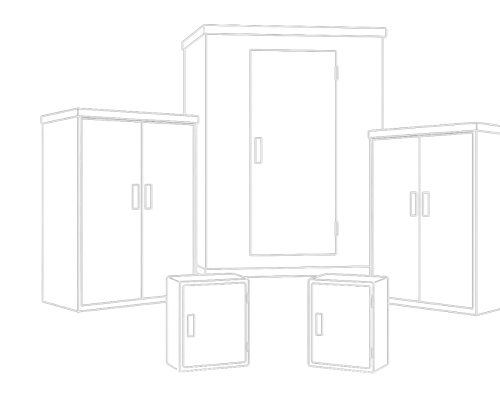
Polyester box or wardrobe: how to choose?
The material isn’t everything. You also have to choose the right format.
The polyester enclosure is ideal for installations that include a limited number of components: electrical protections, automatons, relays or communication equipment.
When the project requires more space, a polyester cabinet becomes more relevant. It facilitates wiring, improves the accessibility of equipment and leaves room for future developments.
The choice depends mainly on three criteria:
- the number of devices to be integrated;
- the space needed for wiring;
- the prospects for the evolution of the installation.
Anticipating these needs at the design stage avoids replacing the envelope a few years later.
How to choose the right material?
Before selecting an electrical box, ask yourself five questions.
1. What is the installation environment?
Humidity, chemicals, spray, UV or high temperatures directly influence the choice of material.
2. What are the mechanical constraints?
An installation exposed to shocks will not have the same needs as a cabinet installed in a technical room.
3. What are the maintenance requirements?
A corrosion-resistant material limits interventions and extends the life of the installation.
4. Are there any regulatory constraints?
Some sectors require specific cleaning materials or procedures.
5. What is the cost over the entire lifetime?
The purchase price remains significant, but it must be put into perspective with the installation, maintenance and replacement costs.
An analysis of these criteria makes it possible to choose an envelope adapted to the real needs of the installation rather than a simple budgetary criterion.
FAQ: Polyester or stainless steel box
Yes, but not on the same criteria. Stainless steel offers better resistance to shocks and high mechanical stresses. Fiberglass-reinforced polyester is distinguished by its excellent resistance to corrosion, UV and chemical agents. The choice therefore depends primarily on the environment of use.
Absolutely. The polyester boxes are designed to withstand bad weather, UV radiation and temperature variations. They are widely used to protect electrical equipment installed outdoors, particularly in the energy, water treatment or infrastructure sectors.
Polyester is particularly suitable for environments exposed to moisture or corrosion. It is found in water treatment plants, photovoltaic installations, chemical industrial sites, energy distribution networks and infrastructure located by the sea.
Stainless steel is recommended when the installation is subject to high mechanical stress or specific hygiene requirements. This is particularly the case in certain food and pharmaceutical industries or on equipment that is particularly exposed to shocks.
The choice depends on several criteria: the installation environment, corrosion risks, mechanical stresses, regulatory requirements and the expected level of maintenance. A study of these parameters allows you to select the most suitable envelope for your application.
Conclusion
The choice between a polyester box and a stainless steel box is not based on a “better” material than the other, but on its suitability with the constraints of the installation. In environments exposed to moisture, UV or corrosive agents, glass fiber reinforced polyester offers a durable, lightweight and low-maintenance solution. Stainless steel nevertheless retains all its relevance when mechanical or sanitary requirements are a priority.
By analyzing operating conditions from the design phase, you choose an envelope capable of sustainably protecting your equipment and limiting operating costs.
Need support for your project?
Europoly designs and manufactures fiberglass reinforced polyester cabinets for the most demanding industrial environments, within the Europoly group. He completes his offer with Gensollen, specialist in polyester cabins and equipment and sandwich panels.
Do you have a project or a question? Contact our experts for a personalized advice or to discover our range of polyester cabinets and enclosures.