



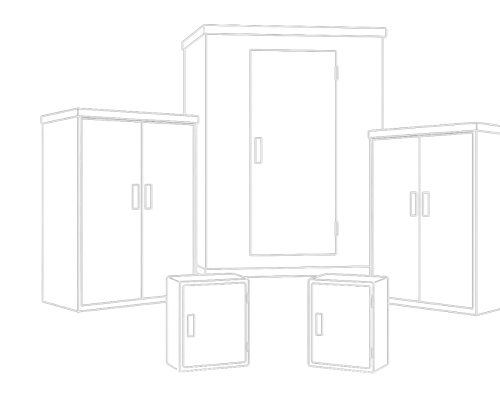
An electrical cabinet is not just an enclosure that protects equipment. It must withstand its environment, simplify maintenance interventions, and accommodate network evolutions for many years.
To achieve this goal, each project begins with a study phase. The electrical cabinet design office analyzes the technical constraints, defines the installation’s characteristics, and designs a solution tailored to the client’s needs. Its work goes beyond simply producing plans. It anticipates on-site challenges and guides technical choices before manufacturing begins.
This expertise is essential in sectors such as telecommunications, FTTH networks, water infrastructure, and industry. Each environment imposes specific constraints. A cabinet installed by the sea is not subjected to the same stresses as a cabinet located in an industrial zone or a telecom cabinet deployed on a public road.
By integrating these parameters from the beginning of the project, the design office helps to improve the reliability of the installations, reduce maintenance costs and extend their lifespan.
Why use an electrical cabinet design office?
Each project has its own constraints. Location, climatic conditions, integrated equipment, and regulatory requirements directly influence the design of the cabinet.
The design office intervenes to analyze these elements before defining the technical solution. This approach avoids many errors that often occur when the design is limited to the dimensions of the cabinet alone.
For example, an enclosure may lack sufficient space to accommodate future equipment. Access may complicate maintenance operations. The level of protection may also prove inadequate against humidity, dust, or impacts.
The design office therefore takes a step back from the project. It is not only seeking to meet the immediate need. It designs a cabinet that will remain efficient throughout its entire operational life.
This comprehensive approach also offers economic benefits. A well-thought-out design limits modifications after installation and reduces corrective interventions.
The role of a design office in the design of an electrical cabinet
The design office is involved throughout the project. It transforms a functional need into an industrial solution capable of meeting the constraints of the field.
Analyze the technical constraints
The first step is to understand the environment of the installation.
The engineering firm identifies climatic constraints, corrosion risks , operating conditions, and regulatory requirements. It then defines the appropriate levels of protection, including IP and IK ratings when required by the project.
This analysis allows us to choose a solution that is consistent with the actual conditions of use. The goal is not to oversize the cabinet, but to provide it with the level of protection it truly needs.
Designing a cabinet adapted to its intended use
An electrical cabinet must remain simple to use throughout its entire lifespan.
The design office organizes the interior spaces, distributes the equipment, and plans the cable runs. It also considers future network developments. This proactive approach prevents the cabinet from being replaced prematurely when new equipment needs to be integrated.
The team also ensures that technicians can easily access the site. Good accessibility reduces maintenance time and limits the risk of errors during on-site operations.
Coordinate the various stakeholders in the project
The design of an electrical cabinet involves several professions. Maintenance teams, installers, operators, and technical managers do not always have the same expectations.
The design office centralizes these needs. It seeks the best compromises to propose a solution that meets everyone’s constraints. This coordination streamlines the project and minimizes adjustments during manufacturing.
How does a design project unfold?
Each design office has its own method. However, the main steps remain similar.
The project begins with a needs analysis. The teams gather technical information, identify site constraints, and define the client’s objectives.
The next phase focuses on design. Engineers determine the cabinet’s dimensions, organize its internal architecture, and select the most suitable technical solutions. Discussions with the client allow for progressive adjustments to the project before its final approval.
Once the design is finalized, the project moves into manufacturing. Depending on the project’s complexity, a prototype may be created to verify certain technical choices before mass production.
The design office can then support the evolution of the installation. It adapts the design if new equipment needs to be integrated or if needs change over time.
Use case: a telecom cabinet for an FTTH network
The deployment of fiber optics perfectly illustrates the role of an electrical cabinet design office .
Let’s take the example of a cabinet intended for an FTTH network. It remains installed for several years on public property. It is subjected to inclement weather, temperature variations, and repeated interventions by technicians. A complete analysis of the environment and the necessary safety features of the cabinet is required.
The design office begins by defining the dimensions of the cabinet. It plans enough space to accommodate the current equipment while leaving room for future connections.
He then organizes the cable routing to respect the bend radii of the optical fiber. This step facilitates patching operations and reduces the risk of fiber damage.
The teams also select the level of protection best suited to the installation conditions. Finally, they choose accessories that will improve daily operations, such as mounting plates, locking systems, or supports specifically designed for optical equipment.
In this type of application, fiberglass-reinforced polyester enclosures often provide an excellent solution. They are naturally corrosion-resistant, withstand demanding outdoor environments, and offer good electrical insulation properties.
Use case: designing a water supply point for water networks
Water supply points also illustrate the importance of a design office. This type of equipment not only protects electrical components, but must also meet the specific constraints of water networks and the users’ needs.
A public water supply point remains exposed year-round to inclement weather, UV radiation, temperature variations, and impacts. It also houses various equipment, such as metering devices, valves, and control systems. Each project therefore requires a specific study.
The design office begins by analyzing the operator’s needs. It defines the dimensions of the charging station, the location of the equipment, and the access points required for maintenance. This phase allows for the design of a logical layout and avoids complex interventions once the charging station is operational.
The teams then focus on operational constraints. They verify that components remain easily accessible and that inspection or replacement operations can be carried out quickly. Good internal organization reduces intervention times and improves technician safety.
Finally, the design office chooses the technical solutions best suited to the environment. For an outdoor installation, it prioritizes materials capable of withstanding humidity, UV radiation, and corrosion over the long term.
This approach makes it possible to design reliable, durable, and adaptable water supply points to the expectations of network managers.
How does the design office choose the material for an electrical cabinet?
The material of an electrical cabinet directly influences its lifespan, performance, and operating costs. However, there is no one-size-fits-all solution. Each project has its own specific constraints.
The design office begins by analyzing the installation environment. A cabinet installed outdoors, in a coastal area or on an industrial site, will not be subjected to the same stresses as equipment installed in a technical room.
The design office begins by analyzing the installation environment. A cabinet installed outdoors, in a coastal area or on an industrial site, will not be subjected to the same stresses as equipment installed in a technical room.
In many outdoor applications, fiberglass-reinforced polyester enclosures are a particularly suitable solution. They are naturally corrosion-resistant, withstand humid environments, and offer good electrical insulation properties. Their low maintenance requirements are also an advantage for operators.
However, the design office never chooses a material out of habit. It selects the solution best suited to the specifications and conditions of use.
Want to compare the two solutions? Check out our article dedicated to the differences between a polyester cabinet and a metal cabinet to identify the material best suited to your project.
The expertise of the Europoly design office
At Europoly, the design office supports clients from the very first stages of their project. The teams work closely with operators, technical design offices, and installers to define a solution perfectly tailored to their needs.
Each project begins with an analysis of the specifications. Engineers study the operational constraints, the equipment to be integrated, the installation conditions, as well as the planned medium and long-term developments.
This phase allows us to size the cabinet, define its internal architecture, and select the most suitable accessories. The objective remains the same: to offer a reliable, easy-to-use, and durable solution.
The company develops, in particular, telecom cabinets , FTTH cabinets , polyester electrical boxes and pumping stations intended for communities, industrial companies and network managers.
Bringing the design office and manufacturing together within the same company also facilitates technical exchanges. Teams can adjust designs more quickly as the project evolves and ensure better monitoring until delivery.
FAQ
The design office analyzes the project’s needs, identifies technical constraints, and designs a cabinet adapted to its environment. It intervenes before manufacturing to ensure the technical choices are sound and the installation is reliable.
An outdoor cabinet must withstand harsh weather, humidity, UV rays, impacts, and sometimes corrosion. The design office adapts the design to these constraints to improve the installation’s lifespan.
Engineering firms work for many sectors: telecommunications, FTTH networks, water distribution, energy, industry, public infrastructure and transport.
No. He can design a completely customized solution or adapt an existing range to meet specific constraints.
Fiberglass-reinforced polyester offers excellent corrosion resistance, good electrical insulation, and high durability outdoors. However, the engineering firm verifies that this material meets the project requirements before selecting it.
The design office develops the technical solution. The manufacturer handles its production. Some companies, like Europoly, combine these two areas of expertise to ensure greater consistency between design and manufacturing.
Conclusion
The success of a project does not depend solely on the quality of the equipment installed. It also relies on the choices made from the design phase onwards.
The electrical cabinet design office plays a central role in this process. It analyzes the project constraints, selects appropriate technical solutions, and designs a cabinet capable of meeting the site’s requirements. This expertise helps to minimize technical risks, simplify maintenance, and guarantee the long-term reliability of the installations.
Whether it is a telecom cabinet, an FTTH cabinet, a polyester electrical box or a water supply terminal, a preliminary study constitutes a real lever for performance.
Do you want to develop a custom electrical cabinet or adapt an existing solution? The Europoly teams support you at every stage of the project, from the needs analysis to the design of a solution adapted to your environment and your operational constraints.