


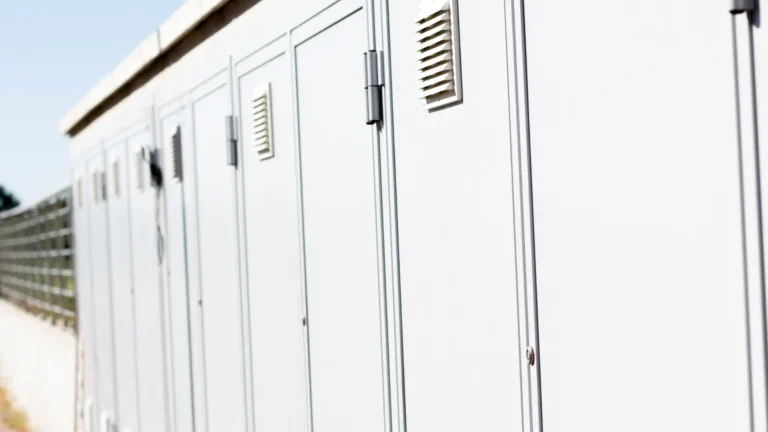
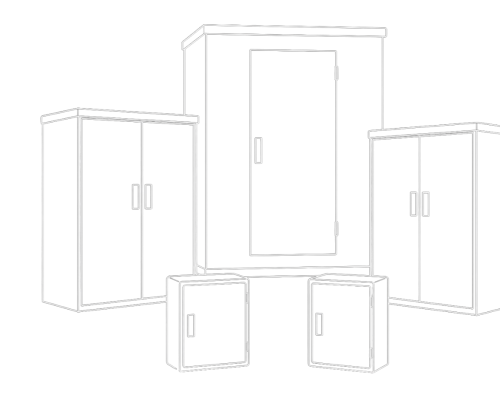
Gas facilities—whether they serve an urban distribution network, an industrial site, or a petrochemical plant—impose specific requirements on the enclosures that house them. Choosing a suitable polyester gas cabinet ensures long-term protection for your equipment, safe operation, and compliance with current regulatory requirements. Europoly and Gensollen offer a complete range, from small instrumentation cabinets to custom-built technical enclosures.
The Specific Constraints of Gas Installations
A regulated, high-risk environment
Gas systems involve a combination of technical, regulatory, and safety constraints that directly impact the choice of enclosures. Natural gas, LPG, and industrial gases expose equipment to constant risks: the presence of flammable vapors, varying pressure in the pipes, and the risk of leaks at connections, valves, and metering devices.
These parameters automatically classify a large portion of facilities into ATEX zones in accordance with European Directives 1999/92/EC and 2014/34/EU. Directive 1999/92/EC requires all operators to identify and classify zones based on the frequency and duration of the presence of an explosive atmosphere: Zone 1 for the occasional presence of flammable gases, Zone 2 for the rare presence of such gases. Directive 2014/34/EU, for its part, requires that all equipment installed in these zones, The ATEX regulatory framework is explained in detail by DEKRA, a leading inspection body in this field.
In addition to ATEX zoning, pressure-reducing and metering stations are governed by specific functional standards. The NF EN 12186 establishes the functional requirements applicable to the design, materials, construction, and maintenance of pressure-reducing and regulating stations for transmission and distribution networks, up to 100 bar on the inlet side. NF EN 12279 applies to pressure-reducing and regulating stations on service connections, up to 16 bar and 200 m³/h. These standards impose specific requirements on the design of the rooms and enclosures housing the pressure-reducing equipment, particularly in terms of…
Added to this is the impact of the environment. A pressure-relief and metering cabinet installed at the boundary of an industrial property or on a distribution network is constantly exposed to UV rays, humidity, freezing temperatures, air pollutants, and, in some cases, sea spray at port sites. An untreated metal enclosure will corrode. An improperly sized cabinet requires frequent and costly maintenance.
Critical functions to be protected and their specific requirements
In a gas project, enclosures must house equipment whose failure could have serious consequences.
The shut-off and connection boxes house the main shut-off valves (OCG), quarter-turn safety valves and overpressure or maximum-pressure flow detection devices (DDMP). These components are located at the boundary of the property or at the base of the installation. Their enclosure must allow rapid access in an emergency whilst providing a minimum IP65 rating against water jets and dust ingress, and IK10 impact resistance.
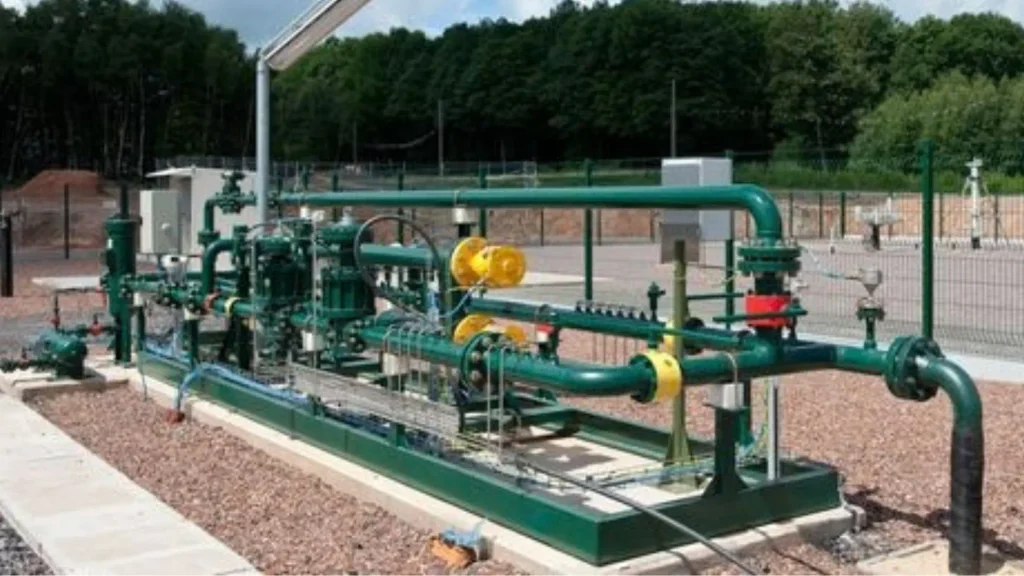
The distribution and metering cabinets These include pressure-reducing regulators, gas filters, diaphragm, turbine or ultrasonic meters, remote transmission devices and, in some cases, emergency pressure regulators. These components form the heart of the delivery station. The metrological accuracy of the meters, which are subject to regulatory verification by the DRIRE, requires strict thermal stability within the enclosure: excessive temperature fluctuations cause measurement drifts and errors in
The instrumentation and control cabinets house differential pressure, absolute pressure and temperature transmitters, motorised control valves, programmable logic controllers and SCADA supervision systems. This equipment is sensitive to vibrations, internal condensation and electromagnetic fields. In an ATEX-classified zone, the enclosure must guarantee, depending on the required equipment category, an Ex e (increased safety) or Ex d (flameproof enclosure) protection type in accordance with the standard
In large-scale installations, technical cabins and shelters combine all functions within a single prefabricated building: pressure-reducing stations, metering, control cabinets, electrical equipment and, in some cases, rest or maintenance areas for operations technicians. The NF EN 12186 standard specifies that premises housing pressure-reducing and regulating stations must be designed in such a way that a gas leak does not lead to a dangerous situation, with partitions
The risks of choosing the wrong enclosure
Choosing an unsuitable enclosure leads to practical problems in the field. Corrosion of a metal enclosure in a damp or chemically aggressive environment results in premature replacements and production stoppages. An insufficient IP rating exposes the equipment inside to the ingress of water or dust, which can cause faults and measurement drifts. The absence of ATEX certification in a classified area constitutes a regulatory non-compliance for which liability may be incurred
The cost of making the wrong choice far exceeds the price of the enclosure. It includes the costs of corrective maintenance, production downtime, undetected metering errors, legal risks and formal notices issued during periodic regulatory inspections required by the decree of 26 May 2016 for installations in ATEX zones.
Why fibreglass-reinforced polyester is becoming the standard choice for gas installations
A material designed for harsh environments
Glass-fibre-reinforced polyester, or GRP (Glass Reinforced Polyester), is the material of choice for enclosures exposed to severe chemical and climatic stresses. Its properties are particularly well suited to gas installations.
It is completely resistant to corrosion. Unlike steel or aluminium, it does not rust, oxidise or react when in contact with hydrocarbons, solvents or saline atmospheres. This is a decisive advantage at petrochemical sites, LPG storage terminals or facilities located near the coast.
It offers high mechanical strength. Certified to IK10 in accordance with the IEC 62262 standard, it can withstand impacts of up to 20 joules without deforming or allowing cracks to propagate. This characteristic is essential at sites where there is a risk of impact from handling equipment or vehicles.
It is a Class II electrically insulated device in accordance with IEC 60529, which eliminates the risk of the enclosure becoming accidentally energised. This is a key advantage in gas installations where an electric arc constitutes a potential source of ignition in an ATEX zone.
It is stable when exposed to UV light and temperature fluctuations, ranging from -35 °C to +80 °C depending on the formulation. This range covers all climatic conditions encountered in mainland France and in the export markets where the major clients in the oil and gas sector operate.
Finally, it can be fitted with an antistatic finish meeting the Ex e requirements of the IEC 60079-7 standard for ATEX zones, a thermal insulation layer for sensitive measuring equipment, or an anti-graffiti coating for installations in urban environments.
Polyester versus steel and aluminium
In gas projects, comparisons of materials are a recurring theme. 316L stainless steel offers excellent corrosion resistance but at a significantly higher cost, and its considerable weight makes handling and transport on site difficult. Aluminium is lightweight but susceptible to certain chemicals found at processing sites and is not suitable for areas subject to high levels of mechanical impact. Polycarbonate is used for small residential connection boxes
Glass-fibre-reinforced polyester offers the best balance between chemical resistance, lightness, durability and total cost of ownership. Its estimated service life exceeds 30 years without any special surface treatment, which significantly reduces the need for preventive maintenance and replacement costs over the installation’s life cycle. To find out more about our manufacturing techniques and the detailed properties of the materials used, please visit the dedicated pages on our
The Europoly ranges for gas installations: from control boxes to cabinets
A range of products and services organised by level of need
Europoly has been manufacturing fibreglass-reinforced polyester enclosures and cabinets in Mornant, near Lyon, since 1984. The entire product range is ISO 9001 certified and meets protection ratings IP55 and IP65 in accordance with IEC 60529, as well as impact resistance rating IK10 in accordance with IEC 62262, with ATEX options available for almost all models.
For gas installations, three product ranges cover the vast majority of on-site requirements.
Mini Euro: the instrumentation and cut-off unit
The Mini Euro is a compact enclosure, available in sizes ranging from 300 x 250 x 160 mm to 800 x 600 x 300 mm. It is suitable for measurement, control and localised isolation applications: protection of a differential pressure transmitter upstream of a turbine meter, a connection box for an IEC 60079-29 gas detector, or a 4–20 mA remote reading unit on an industrial meter.
Certified to IP65 and IK10 as standard, it can be supplied with an antistatic internal coating for Category 2G ATEX zones. Its light weight and ease of installation on walls or pipes make it the go-to choice for instrumentation engineers on petrochemical projects and at small to medium-sized pressure-reducing stations.
Euro Instrum: the benchmark instrumentation cabinet
The Euro Instrum is specifically designed for industrial process instrumentation applications: differential pressure transmitters, 5-way manifolds, vent and isolation valves, multi-parameter measurement units, and PID control systems. Its anti-static interior coating is available as standard for ATEX-classified zones.
It incorporates built-in heating with a thermostat, double-walled thermal insulation and forced ventilation, making it the ideal enclosure for sensitive measuring equipment exposed to wide temperature fluctuations. At a gas distribution site or a compressor station, the Euro Instrum protects critical sensors, measurement drift in which can lead to billing errors relating to gas volumes or the unintended triggering of safety systems.
Euro Medium and Maxi Euro: pressure-relief and metering cabinets
For medium to large-sized delivery points, the Euro Medium and Maxi Euro 1900 cover the full range of usable dimensions.
The Euro Medium is a modular cabinet available in sizes ranging from 500 x 500 x 300 mm to 1250 x 2000 x 500 mm, with over 224 possible configurations through the assembly of panels. Its modular design allows the internal volume to be precisely adapted to the equipment to be housed, without any unnecessary extra volume that would increase the overall footprint.
These cabinets can be supplied with pre-integration options fitted in the workshop: special-key locks, pre-drilled mounting plates in accordance with the customer’s layout plan, and metric or PG cable glands calibrated for the passage of measurement cables and process pipework.
The advantage of having a single provider, from the box to the cabin
Why supplier consistency matters
On a large-scale gas project, equipment is often sourced from several suppliers. An instrumentation cabinet purchased from a distributor, a metering cabinet ordered from a manufacturer, a technical shelter commissioned from a specialist shelter supplier. This fragmentation creates practical problems: unsynchronised delivery times, inconsistent certification standards, differing finishes and colours on site, multiple points of contact in the event of non-compliance, and the impossibility of
Europoly and Gensollen enable clients to work with a single French manufacturer for all the components of a gas project, with a single technical dossier and clear contractual liability.
Gensollen: the bespoke technical cabin
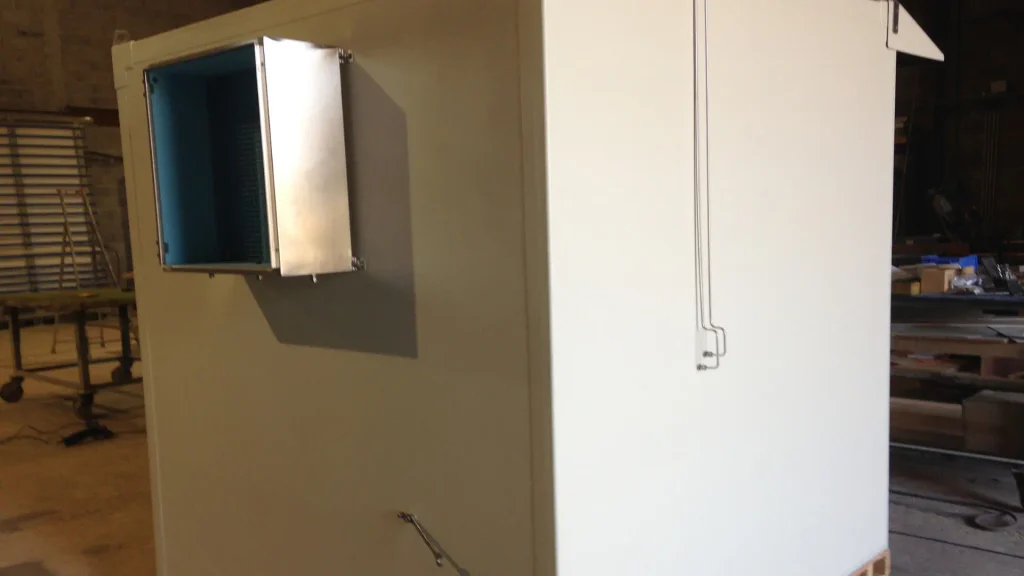
When the scale and scope of a project exceed what a standard cabinet can accommodate, Gensollen steps in. As a subsidiary of the Europoly Group, Gensollen manufactures fully bespoke shelter enclosures made from thermally insulated fibreglass-reinforced polyester sandwich panels at its production site.
A Gensollen enclosure can incorporate a complete pressure-reducing and regulating unit compliant with NF EN 12186, meter cabinets, electrical and control panels, cabling installed by Polyelec, a controlled mechanical ventilation system, an anti-static raised floor, and thermal and acoustic insulation suited to the noise levels required on an industrial site.
It is delivered to site in components pre-assembled in the workshop, which reduces installation time on site, the risk of assembly errors in classified areas and the need for personnel to enter ATEX zones whilst work is in progress. The thermal insulation of the sandwich panels helps to maintain the internal temperature within the guaranteed operating range of the on-board equipment, without the need for additional electric heating, even in severe winter temperatures.
Choosing a Gensollen polyester shelter over a brick-and-mortar building offers several operational advantages: delivery times that can be managed to meet the schedule; the ability to relocate the shelter in the event of site reorganisation or changes to the network configuration; a lightweight structure (simple concrete slab foundations without heavy ballast); and resistance to the same chemical and climatic stresses as the enclosures and cabinets in the Europoly range.
Polyelec: electrical integration following the same approach
The group is expanding its range of services with Polyelec, a specialist in electrical integration and cabling. On a gas project, Polyelec is responsible for fitting out the control cabinets, carrying out the cabling for the metering cabinets, integrating the 4–20 mA measurement loops and the HART or Modbus fieldbus connections, and cabling the Gensollen shelters prior to delivery to site.
This single-group structure ensures consistency between the cladding systems and the integrated equipment, with a single point of contact and a single certification dossier for the client.
Options and customisations for gas installations
Key technical options
All Europoly cladding systems can be adapted to the specific requirements of a gas project.
ATEX certification is available across the entire range, with an antistatic internal coating that complies with the Ex e requirements of standard IEC 60079-7. It covers Zones 1 and 2 for gases, in accordance with Directive 2014/34/EU. The antistatic coating reduces the surface resistivity to below the 10⁹ ohm threshold required to eliminate any risk of ignition by electrostatic discharge.
Electric heating with a built-in thermostat keeps measuring equipment within its guaranteed operating range, particularly pressure transmitters – whose diaphragms may drift at temperatures below -10 °C – and ultrasonic meters, which are sensitive to internal condensation. This option is specified on request, depending on the site’s climate zone.
Double-walled thermal insulation reduces temperature differences between the inside and outside, improves the accuracy of the meters’ measurements and extends the service life of the on-board electronic components.
Natural or forced ventilation removes the heat generated by active equipment, prevents internal condensation on printed circuit boards and keeps the concentration of flammable vapours below the lower explosive limit (LEL) in the event of a micro-leak.
The bespoke mounting plate allows instrumentation equipment or electrical components to be pre-installed in the workshop in accordance with the layout plan provided by the client, prior to dispatch to site. This results in significant time savings on site, particularly in ATEX zones where the duration and number of interventions must be kept to a minimum.
Finishes suitable for sensitive sites
At petrochemical sites or industrial areas classified as ICPE Seveso sites, control panels and cabinets can be finished in a specific colour to identify fluids in accordance with the client’s internal guidelines, or can feature screen-printed safety markings displaying ATEX symbols and the gas hazard directly on the door.
On urban installations or distribution networks in public areas, an anti-graffiti finish protects the casing without the need for maintenance over the long term. Explore all our client projects for practical examples of applications in the gas and petrochemical sectors.
Key points to bear in mind for your gas project
A gas installation fitted with high-quality enclosures is one that stands the test of time, remains compliant with the requirements of the ATEX directives and the NF EN 12186 / NF EN 12279 standards, and facilitates maintenance work and statutory periodic inspections. The choice of glass-fibre-reinforced polyester meets virtually all the requirements encountered in these installations: chemical resistance, IK10 impact resistance, Class II electrical insulation, and compatibility with ATEX Zones 1 and
The Europoly approach enables the entire project to be managed through a single point of contact, from small-scale instrumentation packages right through to the Gensollen prefabricated technical cabin with Polyelec electrical integration. This integrated approach simplifies project management, reduces lead times and ensures consistent certification across all delivered packages.
Do you have a gas project currently underway or at the planning stage? Contact the Europoly teams to obtain a quote tailored to your requirements.
FAQ : coffrets et armoires gaz en polyester
A minimum IP55 rating in accordance with IEC 60529 is generally required for outdoor installation in an unprotected location. IP65 is recommended for sites exposed to direct water jets, severe weather conditions or high-pressure cleaning. The entire Europoly range is available in IP55 and IP65. Please see our page on IP and IK protection ratings for details of the classifications.
Yes, provided that the enclosure is fitted with an antistatic coating that reduces the surface resistivity to below 10⁹ ohms, in accordance with the requirements of the Ex e protection type as defined by standard IEC 60079-7 and Directive 2014/34/EU. Europoly offers this option across its entire range. Zones 1 and 2 for gases are covered.
The shut-off cabinet houses the main shut-off valve (OCG), a quarter-turn safety valve and, in some cases, a maximum pressure relief device (DDMP). It is compact and is situated downstream of the connection at the boundary of the property. The pressure-reducing and metering cabinet is a larger enclosure which houses the pressure-reducing regulator, the gas filter, the meter (diaphragm, turbine or ultrasonic), the emergency pressure regulator and the remote management equipment. It forms the core of the delivery station as defined by NF EN 12186 or NF EN 12279, depending on the pressure and flow rate.
Yes. Europoly’sEuro Instrumis specifically designed for process instrumentation: differential and absolute pressure transmitters on 5-way manifolds, motorised control valves, and multi-parameter measurement units with 4–20 mA, HART, Modbus or Profibus protocols. Heating, thermal insulation and ATEX-compliant antistatic coating options are available as standard.
A Gensollen cabin is a prefabricated shelter made from fibreglass-reinforced polyester sandwich panels with integrated thermal insulation; it is fully made to measure and delivered fully assembled on site. It is used when a project requires a single building to house a pressure-reducing and regulating station compliant with NF EN 12186, meter cabinets, control and monitoring equipment, and a maintenance room. It offers a superior alternative to a brick-built building thanks to controlled delivery times and its lightweight construction
Yes. Europoly is ISO 9001-certified. The product range also includes GOST R certifications for export markets in the countries of the former Soviet Union, which is a major market in the oil and gas sector.
Lead times vary depending on the dimensions, the options requested and the desired level of pre-integration. Please contact Europoly directly, specifying your site constraints, your ATEX zone classification and your technical specifications, to obtain an accurate lead time and quotation.